Modern Lifestyle Habits That Are Damaging Your Spine Every Day
Think about your day for a moment.
You woke up and checked your phone in bed. You sat hunched at your desk for eight hours. You ordered food online, ate on the sofa, and watched Netflix lying at an odd angle. Then you went to sleep — probably on a mattress that hasn’t been changed in years.
Your spine had a terrible day. And it didn’t say a word.
That’s the problem. The spine absorbs punishment silently — for months, sometimes years — before the pain becomes impossible to ignore. By the time most people walk into a spine clinic, the damage has been building for a long time.
The good news? Most lifestyle-related spine problems are completely preventable — and when caught early, highly treatable. But first, you need to know what you’re doing wrong.
Here are some of the most common everyday habits that silently affect spine health—and what you can do to protect your back.
#Habit 1: Sitting for Too Long
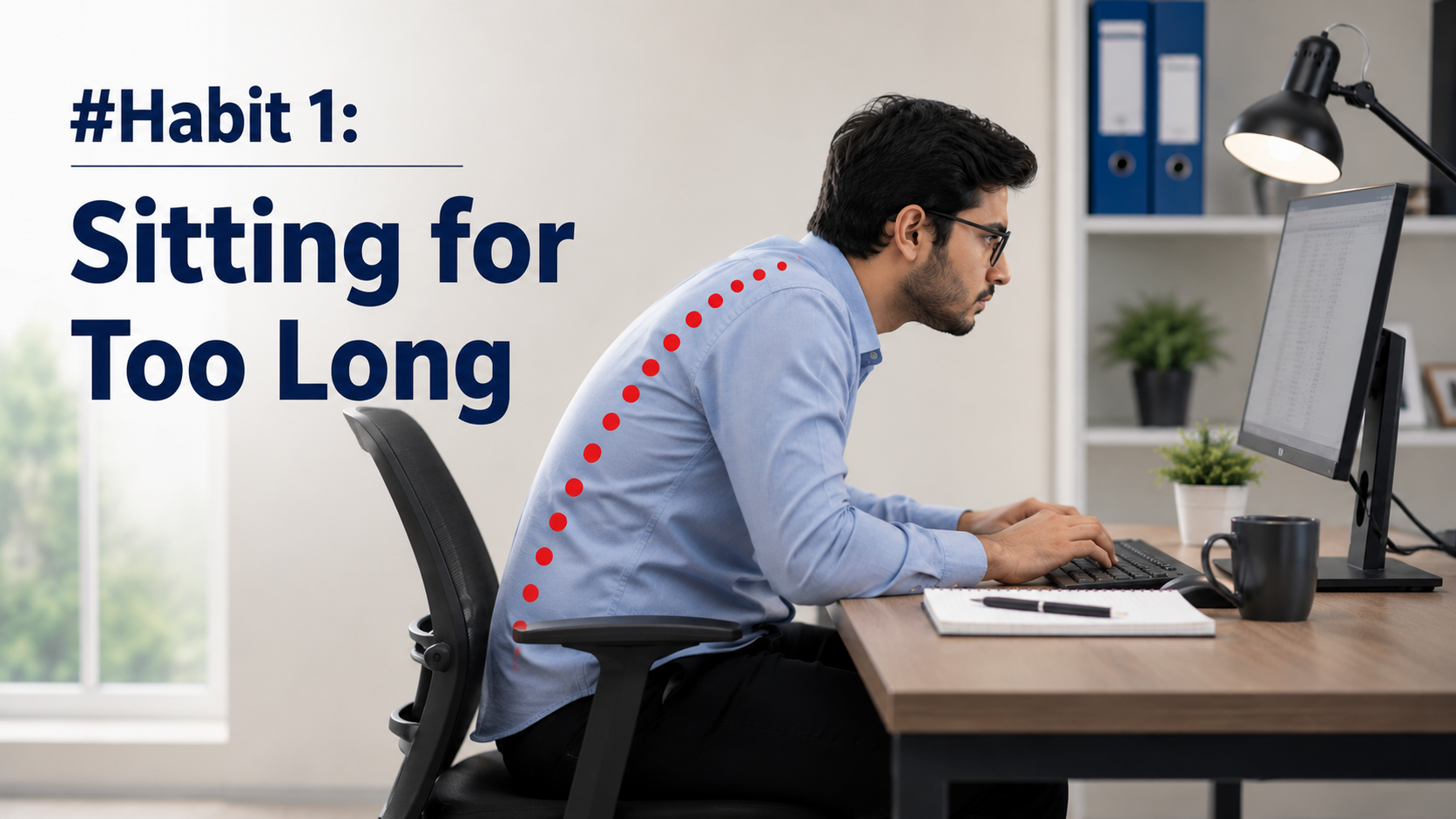
Sitting increases pressure on your spinal discs far more than standing or walking. Eight to ten hours a day in a chair — which is the reality for most working adults — quietly accelerates disc degeneration and lower back damage.
What to do: Walk for two to three minutes every 30 to 45 minutes. Set a reminder — it works.
#Habit 2: Looking Down at Your Phone
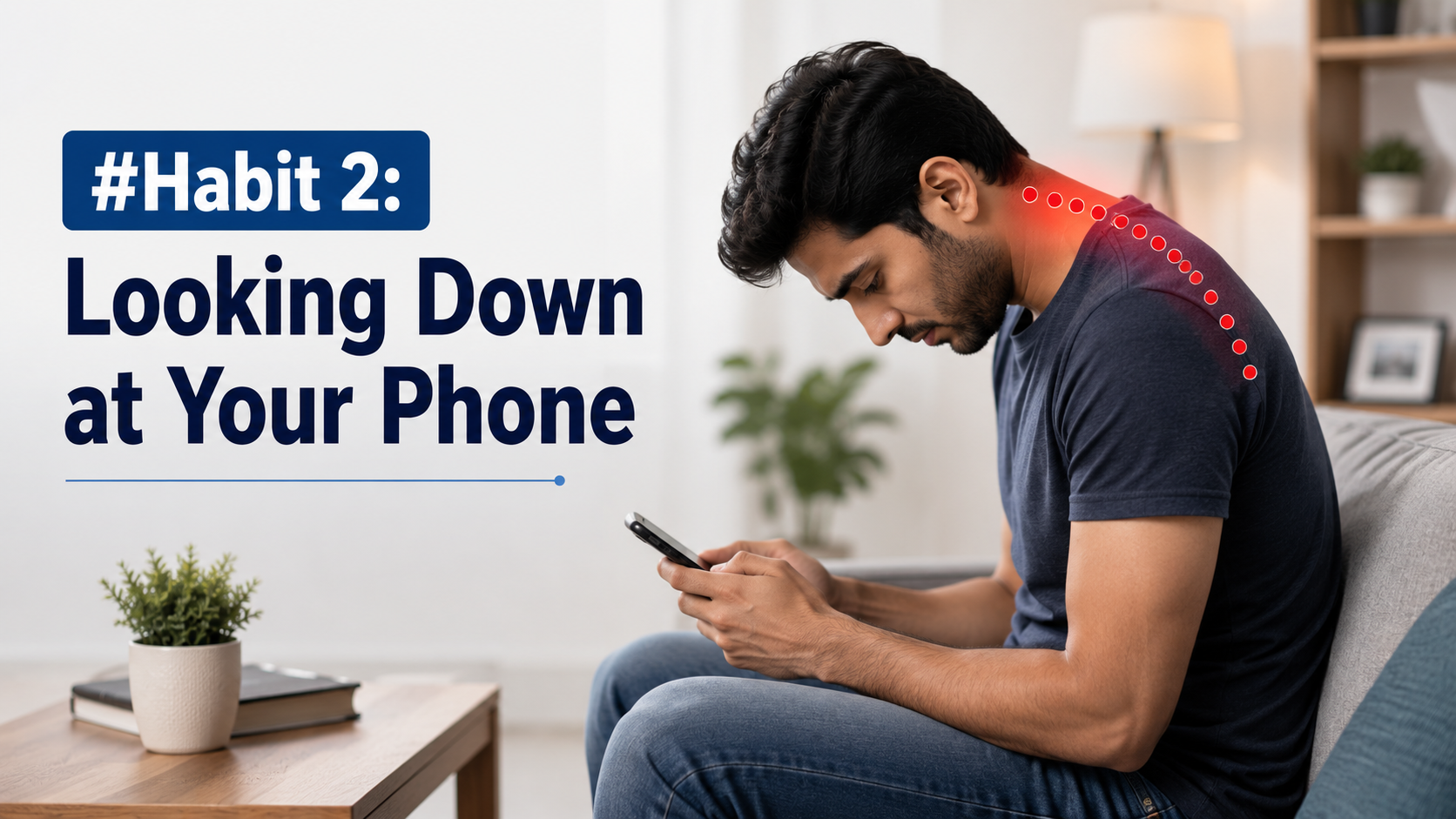
When you tilt your head forward to look at your phone, the effective weight your neck carries multiplies dramatically — up to 27 kg at a 60-degree angle. Most people do this for four to six hours every single day.
What to do: Hold your phone at eye level. Take screen breaks every 20 to 30 minutes.
#Habit 3: Poor Sitting Posture
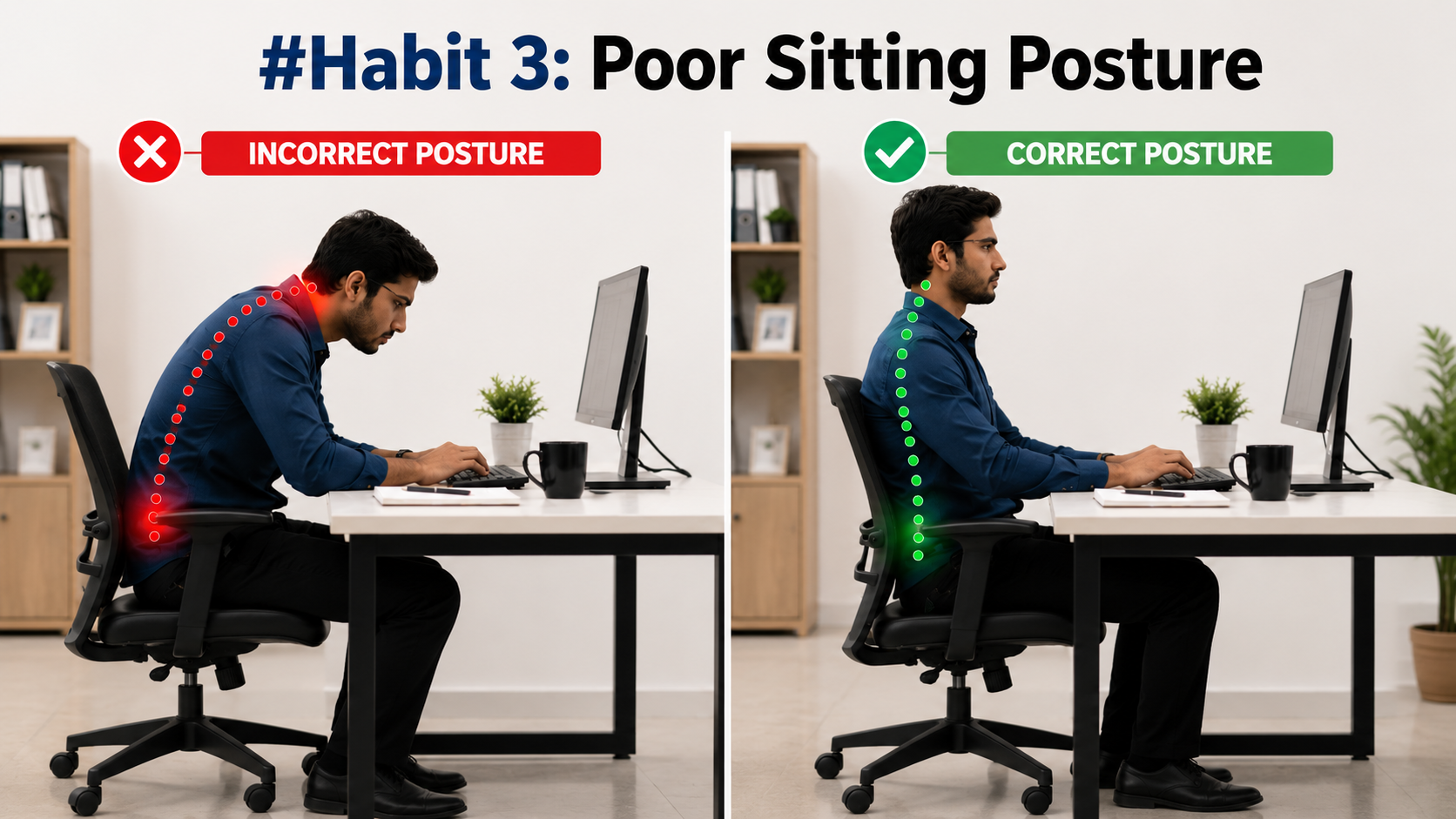
Slouching pushes your spine out of its natural curve, straining discs, muscles, and ligaments unevenly.
What to do: Use a chair with lumbar support, keep your screen at eye level, and sit with feet flat on the floor.
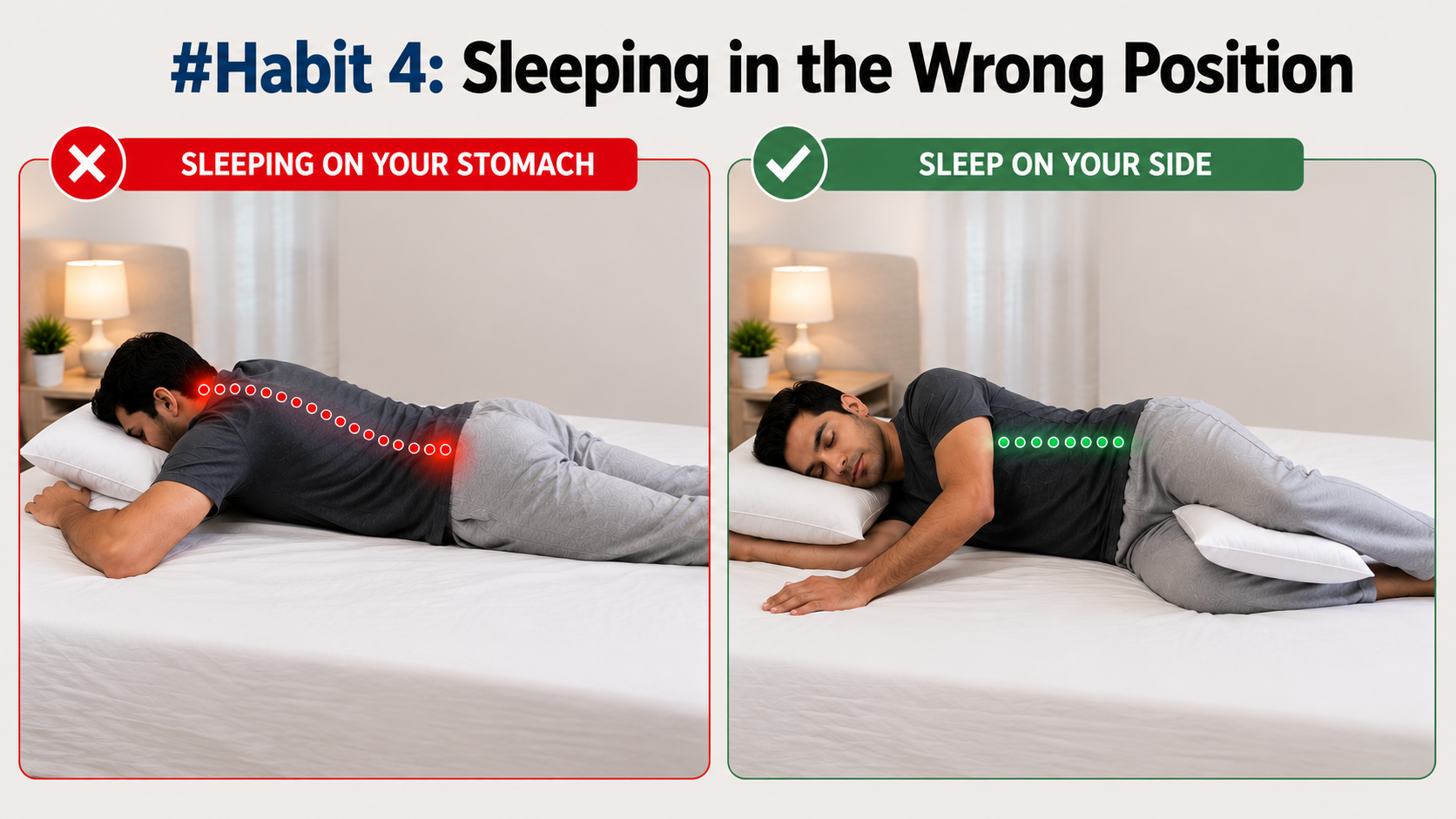
#Habit 4: Sleeping in the Wrong Position
Sleeping on your stomach twists your neck and flattens your lower back’s natural curve — eight hours of spine damage every night. Most people connect their morning stiffness to everything except how they slept.
What to do: Sleep on your side with a pillow between your knees. Use a medium-firm mattress.

#Habit 5: A Sedentary Lifestyle
Spinal discs receive nutrients through movement — not direct blood supply. When you stop moving, discs degenerate and core muscles weaken, leaving your spine to carry the load alone.
What to do: Thirty minutes of walking, swimming, or yoga daily is enough to make a real difference.
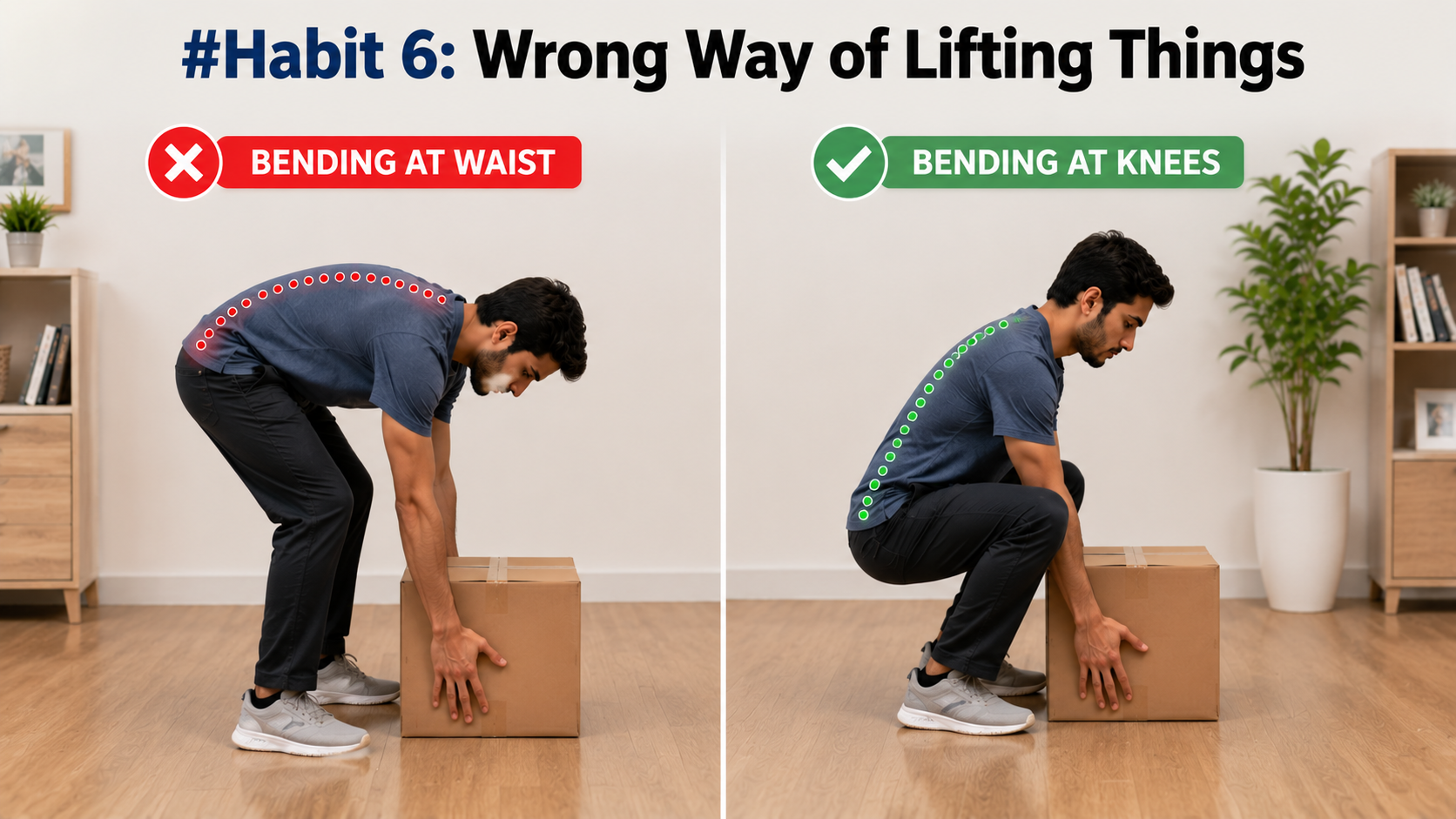
#Habit 6: Wrong Way of Lifting Things
Most serious spine injuries don’t happen in the gym only — they also happen with grocery bags, toddlers, and laundry baskets. Bending at the waist instead of the knees puts enormous pressure on your lumbar discs in a split second.
What to do: Bend your knees, keep the object close to your body, and never twist while lifting.
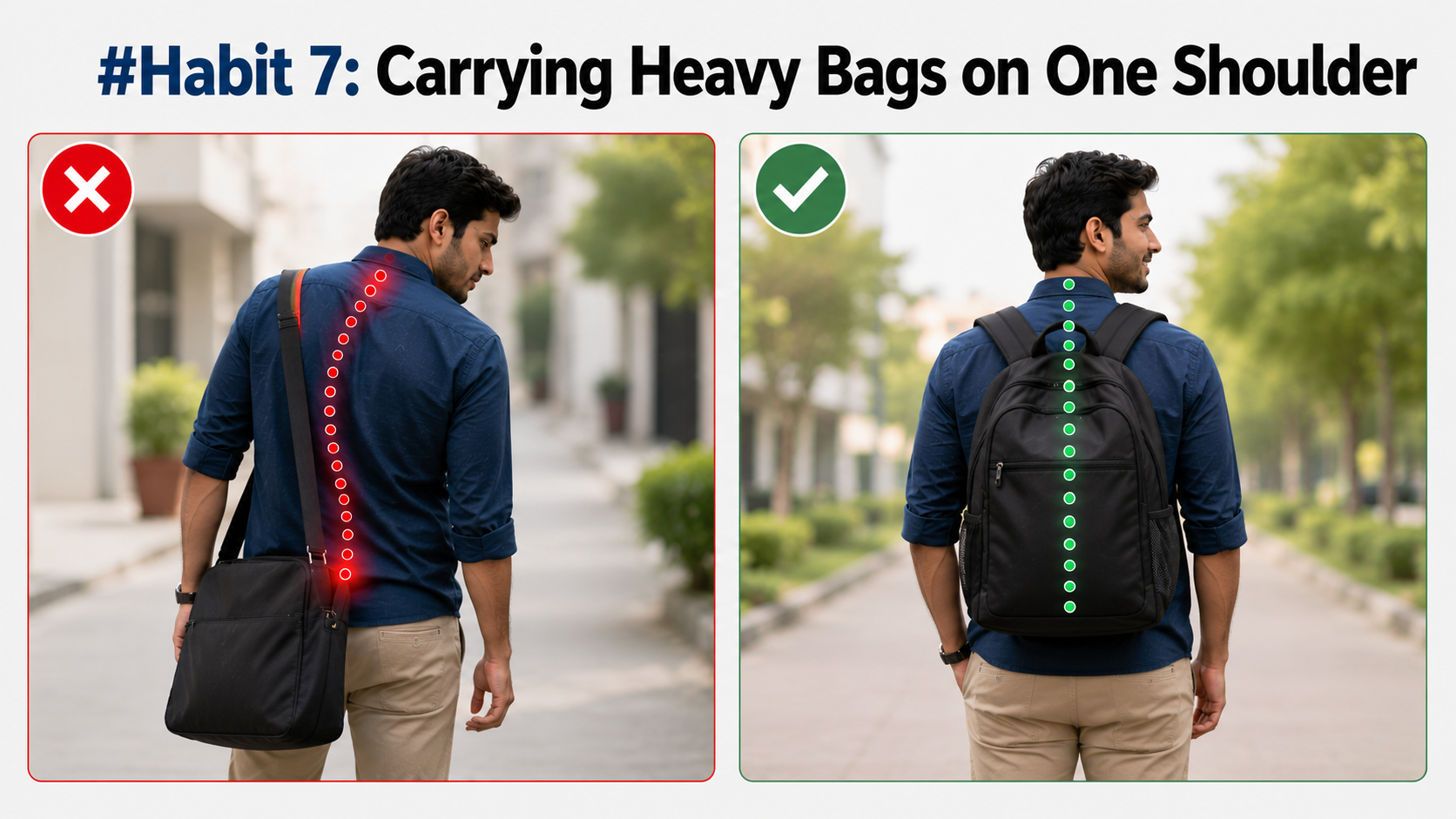
#Habit 7: Carrying Heavy Bags on One Shoulder
Single-shoulder loading creates a spinal imbalance that strains muscles on both sides unevenly over time. For children carrying heavy school bags daily, this is an even more serious concern.
What to do: Switch to a backpack with both straps. If using a single-strap bag, switch shoulders regularly.
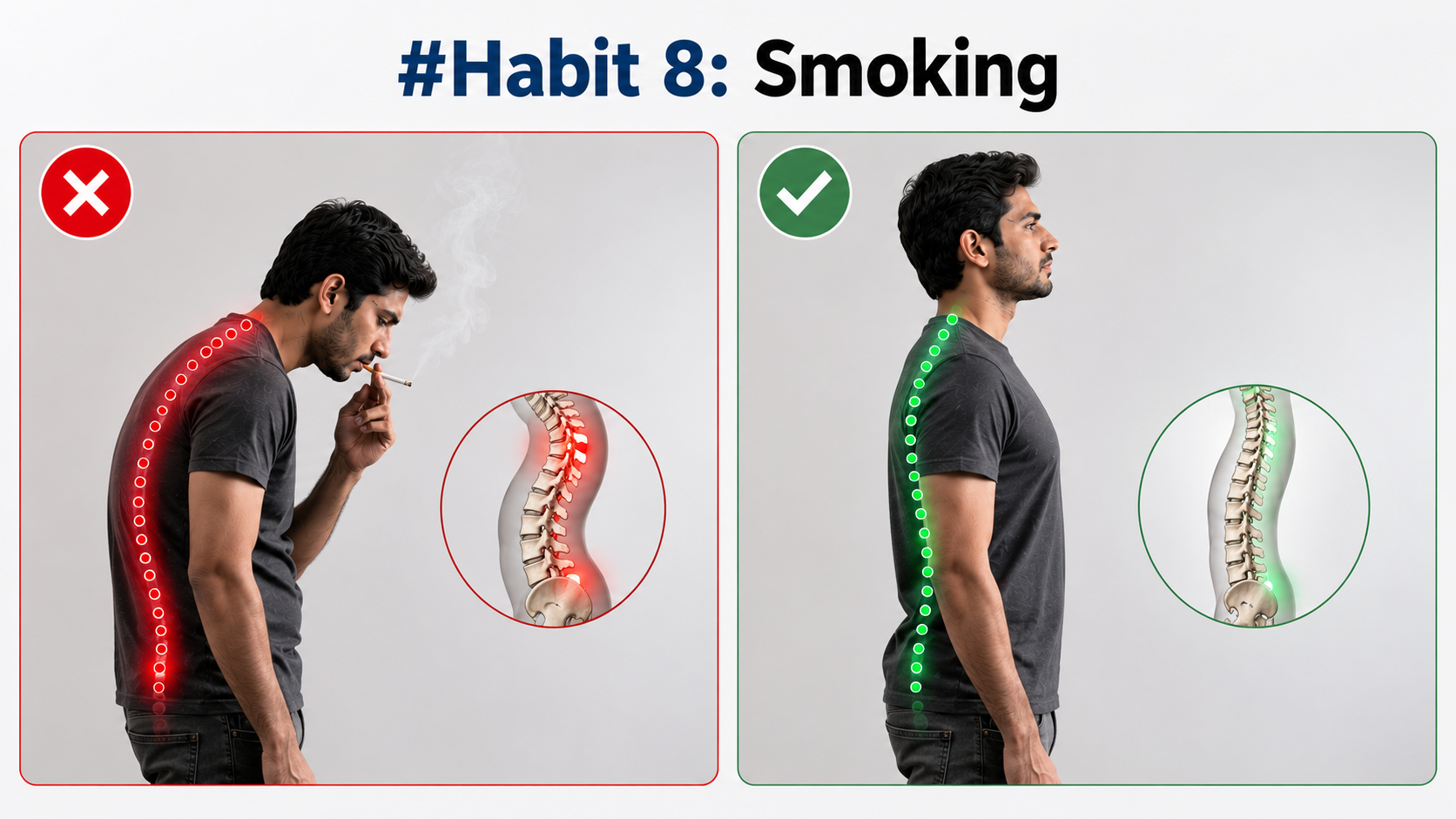
#Habit 8: Being Overweight
Every extra kilogram adds pressure to your spinal discs. Excess weight around the abdomen shifts your centre of gravity forward, forcing your lower back to compensate constantly.
What to do: Maintaining a healthy weight through balanced nutrition and regular physical activity helps reduce stress on the spine and supports long-term spine health.
Know When It’s Time to See a Spine Specialist
Ignoring persistent back pain or relying only on painkillers can delay the right diagnosis and allow the underlying condition to worsen. Early consultation with a spine specialist can help prevent complications and improve recovery.
Warning signs to never dismiss:
- Morning stiffness lasting more than 30 minutes
- Pain travelling down your arms or legs
- Numbness or tingling in hands or feet
- Back pain that wakes you up at night
- Pain after any fall or accident
Early diagnosis can make treatment simpler, faster, and more effective.
Expert Perspective — Dr. Bhupesh Patel
Dr. Bhupesh Patel, Pioneer in Endoscopic Spine Surgery at Asian Superspeciality Hospital, Ahmedabad, sees the consequences of these habits every day in his clinic.
“Most of the spine cases I see today are not because of age or accidents. They are because of how people sit, sleep, and move every single day. The encouraging part is that when we catch these problems early, almost all of them are completely manageable. The patients who struggle most are the ones who waited too long.”
At Asian Superspeciality Hospital, our focus is on choosing the right treatment for the right patient at the right time. From physiotherapy and lifestyle correction to advanced endoscopic spine surgery — every patient receives a treatment plan built around their specific condition and life.
Final Thoughts
Healthy daily habits can help protect your spine and reduce the risk of long-term problems. If back or neck pain persists or starts affecting your daily activities, don’t ignore it. Seeking timely medical advice can lead to an early diagnosis and the right treatment for a faster recovery.