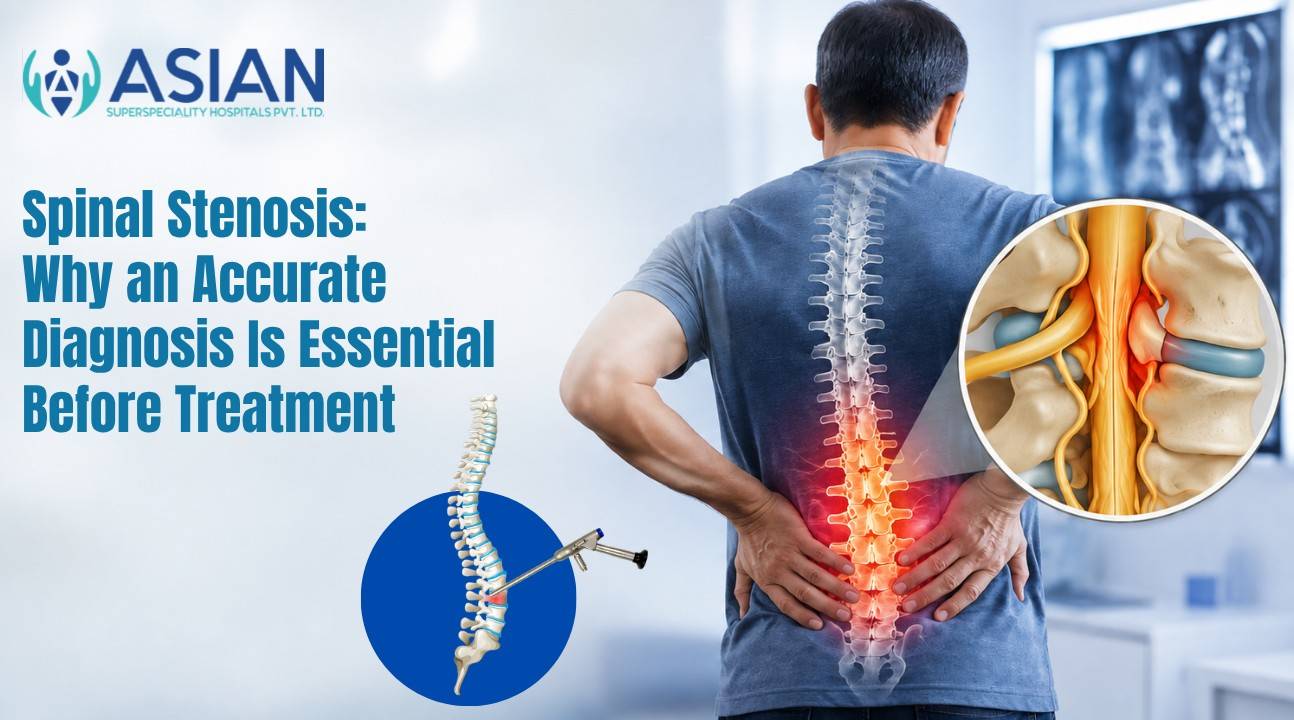
Spinal stenosis is a common spine condition that occurs when the spaces within the spine become narrow, putting pressure on the spinal cord or nearby nerves. It most commonly affects older adults, but it can also develop in younger patients due to certain spine conditions or injuries.
Many people mistake the symptoms of spinal stenosis for normal ageing or general back pain. However, identifying the exact cause of your symptoms is essential, as the right treatment depends on an accurate diagnosis. With advancements in Spine Treatment in India, patients today have access to specialised diagnostic techniques and personalised treatment options that can significantly improve their quality of life.
What Is Spinal Stenosis?
Spinal stenosis is a condition where the space inside the spine becomes narrower. As this space gets smaller, it puts pressure on the spinal cord or the nerves that travel through the spine. This pressure can cause pain, numbness, tingling, or weakness in different parts of the body.
The condition most commonly affects the lower back (lumbar spine) and the neck (cervical spine).
Some common causes include:
- Age-related wear and tear
- Bone spurs
- Thickened ligaments
- Slip disc (Herniated Disc)
- Arthritis affecting the spine
Lumbar vs Cervical Spinal Stenosis: What’s the Difference?
Spinal stenosis can affect different areas of the spine, with lumbar and cervical spinal stenosis being the most common types.
- Lumbar spinal stenosis: Affects the lower back and may cause pain, numbness, tingling, or weakness in the legs. Symptoms may become more noticeable while standing or walking and may improve when sitting or bending forward.
- Cervical spinal stenosis: Affects the neck and can cause pain, numbness, or weakness in the arms and hands. When the spinal cord is compressed, it may also affect balance, walking, or hand coordination.
Common Symptoms of Spinal Stenosis
The symptoms vary depending on which part of the spine is affected.
Common warning signs include:
- Back or neck pain
- Pain radiating into the arms or legs
- Numbness or tingling
- Muscle weakness
- Difficulty walking or standing for long periods
- Symptoms that improve when sitting or bending forward
Since these symptoms can also occur in other spine conditions, they should always be evaluated by a spine specialist.
Why an Accurate Diagnosis Matters
Not every patient with back pain or leg pain has spinal stenosis. Similar symptoms can also occur due to a slipped disc, sciatica, muscle strain, or other nerve-related conditions.
This is why an accurate diagnosis is the foundation of effective treatment. A spine specialist will assess your symptoms, perform a physical examination, and may recommend imaging tests such as X-rays or an MRI scan to identify the exact cause of nerve compression.
Starting treatment without confirming the diagnosis may delay recovery and allow the condition to worsen over time.
Treatment Options for Spinal Stenosis
Treatment is planned according to the severity of symptoms, the degree of nerve compression, and how much the condition affects your daily activities.
Conservative Treatment
Depending on the severity of symptoms and nerve compression, initial treatment may include non-surgical approaches such as:
- Medications
- Physiotherapy
- Lifestyle modifications
- Activity modification
If symptoms continue despite conservative treatment or significant nerve compression is present, surgery may be recommended.
Surgical Treatment
For patients whose symptoms do not improve with conservative treatment, surgery may be recommended.
One of the advanced treatment options is Endoscopic Spine Surgery, a minimally invasive technique that offers several benefits for suitable patients.
Key advantages include:
- Small incision using specialised camera-guided instruments
- Minimal disruption to surrounding muscles and tissues
- Reduced post-operative pain
- Smaller scars
- Shorter hospital stay
- Potential for faster recovery in appropriately selected patients
Expert Spine Care at Asian Superspeciality Hospital
An accurate diagnosis is the first step towards successful treatment. Asian Superspeciality Hospital provides comprehensive evaluation and treatment for conditions such as spinal stenosis, slip disc, sciatica and nerve compression. Depending on the diagnosis, treatment may range from conservative care to minimally invasive techniques such as endoscopic spine surgery. .
Patients searching for Spine Treatment in India often look for hospitals with experienced spine specialists, advanced diagnostic facilities, and minimally invasive treatment options. Asian Superspeciality Hospital offers comprehensive spine care, modern imaging technology, expertise in Endoscopic Spine Surgery, and personalised rehabilitation to help patients receive the right treatment at the right time.
FAQs
Final Thoughts
An accurate diagnosis is the first step towards successful treatment. Asian Superspeciality Hospital provides comprehensive evaluation and treatment for conditions such as spinal stenosis, slip disc, sciatica and nerve compression. Depending on the diagnosis, treatment may range from conservative care to minimally invasive techniques such as endoscopic spine surgery. .
Patients searching for Spine Treatment in India often look for hospitals with experienced spine specialists, advanced diagnostic facilities, and minimally invasive treatment options. Asian Superspeciality Hospital offers comprehensive spine care, modern imaging technology, expertise in Endoscopic Spine Surgery, and personalised rehabilitation to help patients receive the right treatment at the right time.