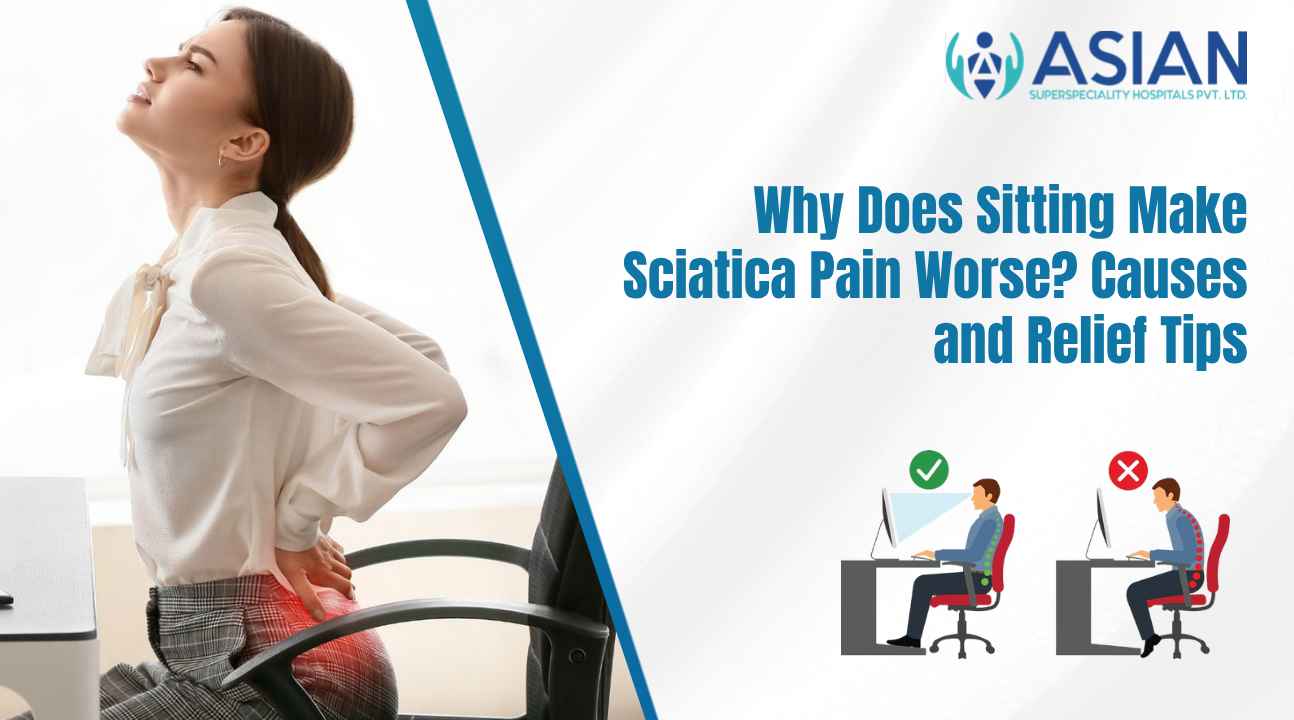
Sciatica is not a disease itself. It is a condition that occurs when the sciatic nerve—the longest nerve in the body—becomes irritated or compressed, causing pain that travels from the lower back into the leg.
Sciatica itself is usually caused by an underlying spine condition rather than sitting alone. Common causes include a slipped disc, spinal stenosis, bone spurs, or degenerative changes in the spine. Sitting does not cause sciatica, but it can make the symptoms worse by increasing pressure on the affected nerve.
If you’ve ever wondered why sitting makes sciatica more painful, the answer lies in how your spine and sciatic nerve respond to prolonged pressure. Understanding the cause can help you manage the pain and know when it’s time to seek professional treatment.
Why Does Sitting Make Sciatica Worse?
When you sit, especially with poor posture, the pressure inside the spinal discs increases. If a disc is already pressing on the sciatic nerve, sitting for long periods can increase that pressure and make the symptoms more noticeable.
Sitting for long periods can make these symptoms worse for several reasons:
> Increased pressure on the lower spine: Sitting places more pressure on the spinal discs than standing or walking, especially in the lower back.
> Poor posture: Slouching or sitting without proper back support can increase stress on the spine and the sciatic nerve.
> Reduced movement: Staying in one position for too long causes muscles to become stiff, which can further irritate the affected nerve.
> Slipped disc: If sciatica is caused by a slipped disc, prolonged sitting can increase pressure on the compressed nerve, making the pain more intense.
Simple Tips to Relieve Sciatica While Sitting
Although sitting may worsen sciatica, a few simple changes can help reduce discomfort.
- Sit with your back supported and your feet flat on the floor.
- Use a chair with proper lumbar support.
- Stand up and walk for a few minutes every 30–45 minutes.
- Avoid sitting on very soft sofas or uneven surfaces for long periods.
- Perform gentle stretching exercises recommended by your doctor or physiotherapist.
- Avoid sitting continuously for more than 30–45 minutes, even if you feel comfortable.
These small adjustments can help reduce pressure on the sciatic nerve and improve comfort during daily activities.
When Should You See a Spine Specialist?
Occasional discomfort may improve with rest and lifestyle changes, but persistent symptoms should not be ignored.
Consult a spine specialist if you experience:
- Pain lasting for several weeks
- Pain radiating down the leg
- Numbness or tingling
- Muscle weakness
- Difficulty walking or performing daily activities
Early evaluation can help identify the underlying cause and prevent the condition from becoming more severe.
Expert Sciatica Care at Asian Superspeciality Hospital
At Asian Superspeciality Hospital, Ahmedabad, patients receive comprehensive evaluation and personalised treatment for sciatica and other spine conditions under the guidance of Dr. Bhupesh Patel.
As a dedicated centre for advanced spine care, the hospital offers modern diagnostic facilities, minimally invasive procedures, and Endoscopic Spine Surgery, ensuring that every treatment plan is tailored to the patient’s condition.
Patients searching for advanced Spine Surgery in India often look for hospitals that combine experienced spine specialists, modern diagnostic facilities, and minimally invasive treatment options. Asian Superspeciality Hospital brings all these services together under one roof, helping patients receive evidence-based and personalised spine care.
Final Thoughts
Sitting may increase sciatica pain, but the right treatment can help relieve symptoms and improve your quality of life. Early diagnosis is the key to identifying the cause and choosing the most effective treatment.
Schedule an appointment with Dr. Bhupesh Patel at Asian Superspeciality Hospital to explore the best treatment options for your condition.