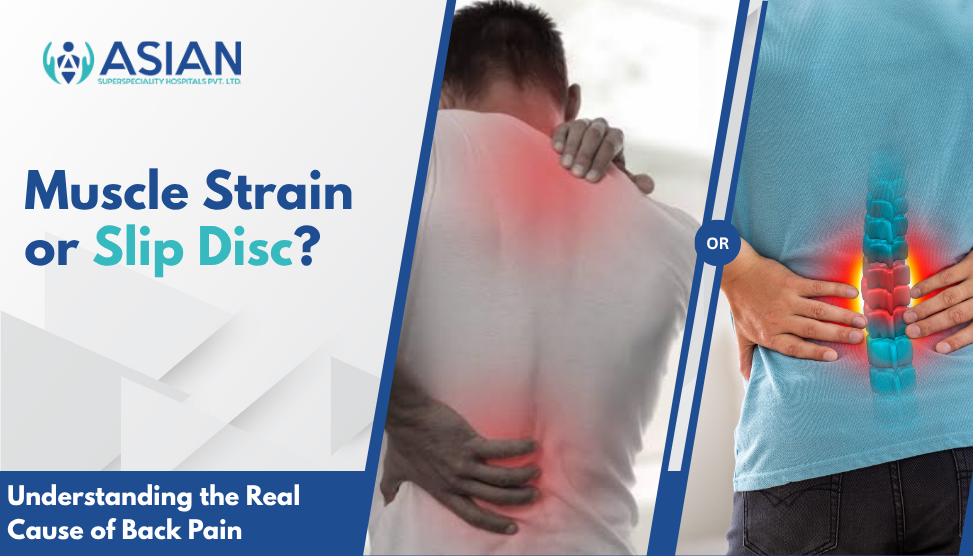
Back pain is one of the most common health problems affecting people of all ages. Whether it starts after lifting something heavy, playing sports, or simply waking up with discomfort, many people immediately assume they have a slipped disc. In reality, not every episode of back pain is caused by a spine problem. Sometimes, it may simply be a muscle strain.
Although muscle strains and slipped discs can cause similar symptoms, they are different conditions that require different treatments. Understanding the difference can help you seek the right care from an experienced back pain doctor in Gujarat before the condition worsens.
What Is a Muscle Strain?
A muscle strain occurs when the muscles or ligaments supporting the back are overstretched or torn. It commonly happens due to sudden movements, improper lifting, poor posture, or excessive physical activity.
Symptoms of a Muscle Strain:
- Localised back pain
- Muscle stiffness or tightness
- Tenderness over the affected area
- Pain that increases with movement
- Symptoms that usually improve with rest and conservative treatment
Most muscle strains heal within a few weeks with proper care and do not involve damage to the spinal nerves.
What Is a Slip Disc?
A slip disc, also known as a herniated disc, occurs when the soft inner portion of a spinal disc pushes through its outer layer and presses on a nearby nerve. This can cause pain not only in the back but also in other parts of the body, depending on the affected nerve.
Symptoms of a Slip Disc:
- Pain radiating into the leg or arm
- Tingling or numbness
- Muscle weakness
- Pain that worsens while sitting, bending, or coughing
- Difficulty performing daily activities
Unlike a muscle strain, a slipped disc may require specialised spine evaluation to determine the most appropriate treatment.
Because the symptoms of a muscle strain and a slipped disc can sometimes overlap, it is not always possible to identify the exact cause based on symptoms alone. A proper medical evaluation is the best way to determine the source of your back pain and choose the right treatment.
Myth vs Fact
Myth: Every back pain is a slipped disc.
Fact: Many cases of back pain are caused by muscle strain and improve with rest, physiotherapy, and lifestyle modifications.
Myth: If the pain improves after a few days, there is no need to see a doctor.
Fact: Recurring pain may indicate an underlying spine condition that requires evaluation by a back pain doctor in Gujarat.
Myth: A slipped disc always requires surgery.
Fact: Most patients improve with medications, physiotherapy, and posture correction. Surgery is recommended only when conservative treatment does not provide adequate relief or when significant nerve compression is present.
Treatment Options For Muscle Strain
- Short period of rest
- Pain-relieving medications
- Physiotherapy
Treatment Options For Slip Disc
- Medications
- Physiotherapy
- Lifestyle and posture correction
- Minimally invasive spine procedures for selected patients
- Surgery only when conservative treatment does not provide adequate relief.
Early diagnosis allows your spine specialist to recommend the most appropriate treatment while avoiding unnecessary procedures.
Expert Back Pain Care at Asian Superspeciality Hospital
Back pain is not always caused by the same condition, which is why an accurate diagnosis is the first step toward effective treatment. At Asian Superspeciality Hospital, Ahmedabad, Dr. Bhupesh Patel evaluates each patient carefully to identify the exact cause of back pain and recommend the most suitable treatment. From muscle strains and slipped discs to other spine disorders, patients receive personalised care using advanced diagnostic facilities, evidence-based treatment plans, minimally invasive spine procedures when required, and comprehensive rehabilitation to support a safe recovery and help them return to their daily activities.