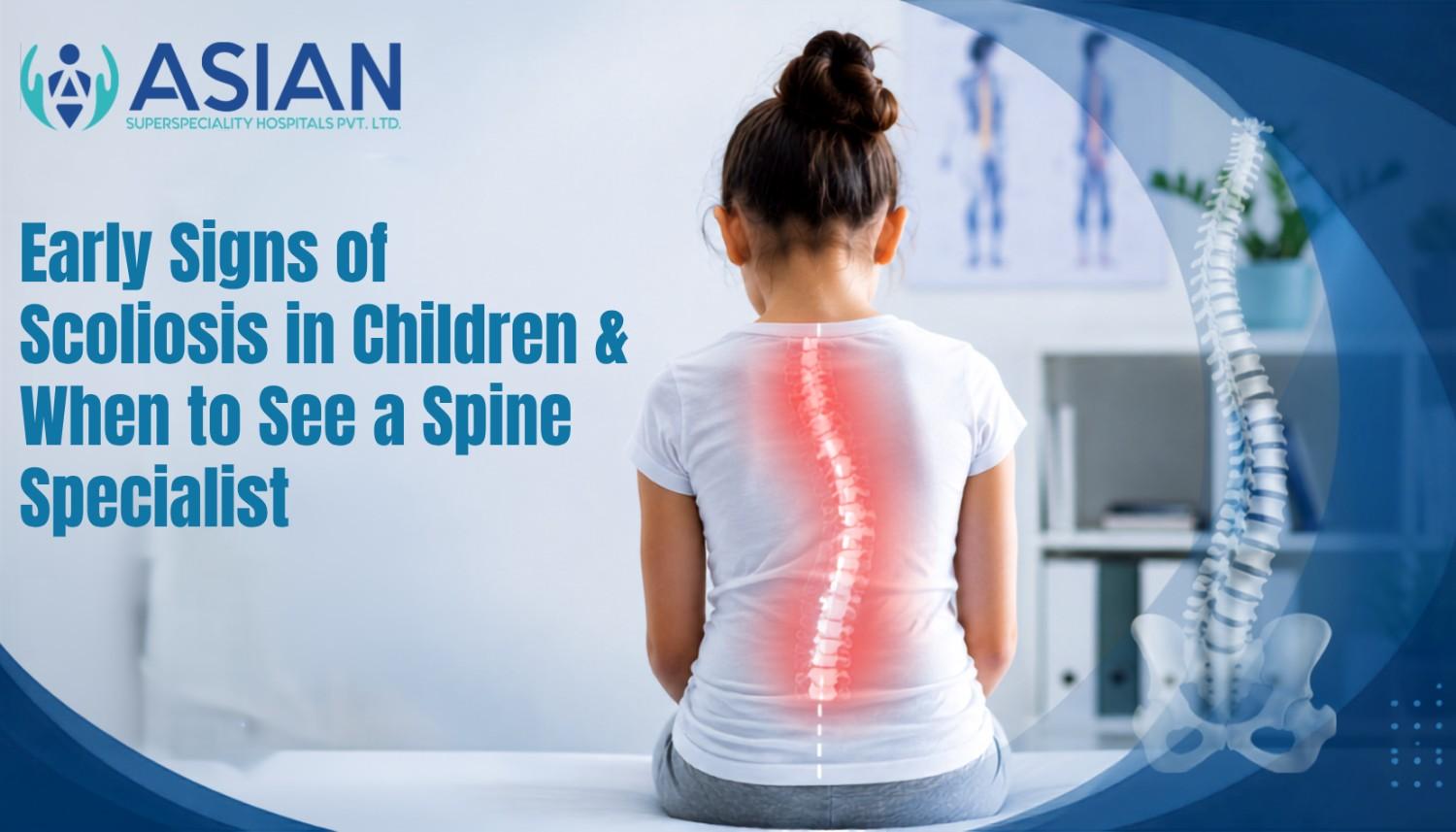
Scoliosis is a condition in which the spine curves sideways instead of maintaining its normal straight alignment. It most commonly develops during childhood or adolescence, especially during periods of rapid growth. In many children, scoliosis does not cause pain in its early stages, so the condition often goes unnoticed.
Recognising the warning signs early is important because timely diagnosis can help prevent the curve from worsening and improve treatment outcomes. If you notice changes in your child’s posture, consulting a Spine Specialist in India can help ensure the right care at the right time.
What Is Scoliosis?
A healthy spine appears straight when viewed from behind. In children with scoliosis, the spine develops an abnormal sideways curve that may gradually increase as they grow.
The exact cause of scoliosis is often unknown, although some cases may be related to congenital conditions, neuromuscular disorders, or other underlying medical conditions. The severity varies from child to child—while mild cases may only need regular monitoring, more significant curves may require treatment.
Early Signs Parents Should Watch For
Scoliosis often develops gradually, so parents are usually the first to notice changes in their child’s posture.
Some common early signs include:
- One shoulder appears higher than the other.
- One shoulder blade is more prominent.
- Uneven waistline.
- One hip appears higher than the other.
- The spine appears curved when the child bends forward.
- Clothes appear to hang unevenly
- The child appears to lean to one side
These changes are often painless in the early stages but should not be ignored, especially during periods of rapid growth.
When Should You See a Spine Specialist?
You should seek medical advice if:
- The uneven posture persists or becomes more noticeable.
- The spinal curve appears to worsen over time.
- Your child develops back pain along with postural changes.
- There is a family history of scoliosis.
- Your child is going through a rapid growth spurt and the spinal asymmetry becomes more obvious.
Early assessment allows the condition to be monitored and treated before it progresses further.
How Is Scoliosis Diagnosed?
A spine specialist begins with a detailed physical examination and may perform the Adam’s Forward Bend Test, which helps identify abnormal spinal curvature.
If scoliosis is suspected, X-rays are usually recommended to measure the degree of spinal curvature and determine the most appropriate treatment plan.
Treatment Options for Scoliosis
The treatment for scoliosis depends on your child’s age, the degree of the spinal curve, and whether the spine is still growing.
- Observation & Monitoring
For mild scoliosis, regular monitoring through clinical examinations and X-rays helps track whether the spinal curve is changing over time.
- Bracing
Bracing may be recommended for children and adolescents with moderate scoliosis who are still growing. The goal is to help prevent the curve from progressing.
- Physiotherapy and Exercises
Scoliosis-specific exercises, along with physiotherapy, can help improve posture, strengthen supporting muscles, and enhance overall spinal balance.
- Scoliosis Surgery
Surgery may be considered for severe or progressive scoliosis, particularly when the curve continues to worsen despite appropriate non-surgical management. The surgical approach is selected according to the child’s age, curve pattern, severity and overall condition. In selected cases, minimally invasive techniques may be considered.
Expert Spine Care at Asian Superspeciality Hospital
Early diagnosis plays a vital role in managing scoliosis effectively. At Asian Superspeciality Hospital, Ahmedabad, children with suspected scoliosis can undergo detailed evaluation to determine the type and severity of the curve. Based on the child’s age, remaining growth and degree of curvature, an individualised treatment plan may include observation, physiotherapy, bracing or surgery when required.
Parents searching for a trusted Spine Specialist in India often look for hospitals with experienced spine specialists, advanced diagnostic facilities, and personalised treatment plans. Asian Superspeciality Hospital offers comprehensive spine care, modern diagnostic technology, and evidence-based treatment to help children receive timely care and achieve the best possible outcomes.
FAQs
Final Thoughts
An accurate diagnosis is the first step towards successful treatment. Asian Superspeciality Hospital provides comprehensive evaluation and treatment for conditions such as spinal stenosis, slip disc, sciatica and nerve compression. Depending on the diagnosis, treatment may range from conservative care to minimally invasive techniques such as endoscopic spine surgery. .
Patients searching for Spine Treatment in India often look for hospitals with experienced spine specialists, advanced diagnostic facilities, and minimally invasive treatment options. Asian Superspeciality Hospital offers comprehensive spine care, modern imaging technology, expertise in Endoscopic Spine Surgery, and personalised rehabilitation to help patients receive the right treatment at the right time.